Identify the operator
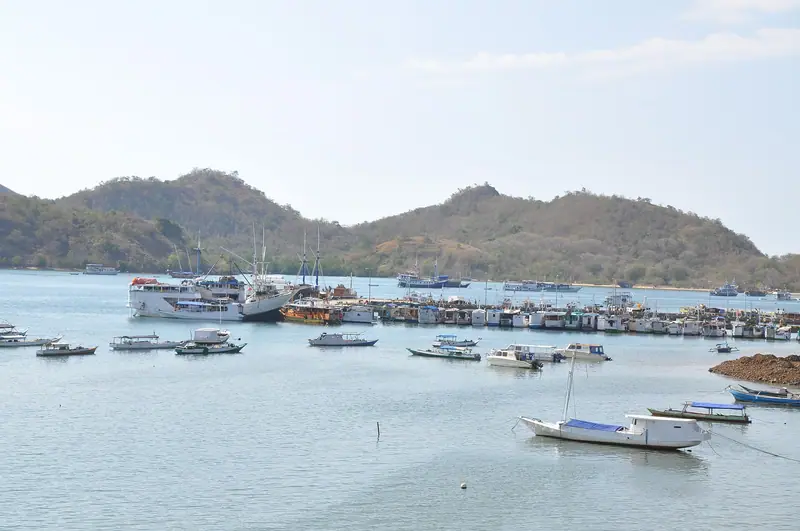
Get the vessel name, the operator and a departure-day contact on the booking. A seller may arrange several boats in Labuan Bajo. The name makes it possible to match your paperwork with the vessel beside the pier and tells you which boat is covered by the sailing approval. On a cabin trip, your booking should also identify the cabin type and route. A similar boat name does not mean the deck or berths are the same.
A speedboat and a phinisi differ in how the trip is sold and in what you do aboard. Boats of the same type can still have quite different seating, boarding heights and sleeping areas. A tender adds another transfer, and crew members need to know which passengers have gone ashore. Before putting out from Labuan Bajo, know where you will sit, where your life jacket is kept and how to reach the crew in an emergency.
| Check | Published requirement or guidance | What you can check |
|---|---|---|
| Sailing approval1 | The harbourmaster issues the SPB. It lapses if the vessel remains in port for 24 hours after issue | The approval applies to the actual vessel and departure. It lapses after 24 hours if the boat has stayed in port |
| Passenger list2 | The SPB application requires the manifest | Check that each passenger’s name appears on the manifest before boarding |
| Marine forecast3 | The port forecast includes wind, wave, current and visibility fields. BMKG publishes separate wave warnings | Read the port forecast and wave warnings for the outbound and return crossings |
| Life jackets4✓ | Both governments advise checking life-saving equipment and flag limited child jacket availability | Try on a jacket that fits before leaving the pier. Child sizes are not always available |
The hotel pickup coordinator handles the van, while the crew or operations contact handles the assigned vessel and the boarding route. At the pier, try on the life jacket you will wear at sea. A child’s jacket has to fit the child’s body, even if the seller lists children’s jackets in general. If the crew cannot provide one that fits, arrange a suitable jacket before sailing or leave the boat.
Sailing approval and manifest
SPB stands for Surat Persetujuan Berlayar. Indonesia’s transport regulation puts the application with the ship’s owner or operator and names the harbourmaster as the issuing authority. The application lists a manifest. Article 9 says the approval is no longer valid if the vessel stays in port beyond 24 hours from issue. A photo sent when you booked can help identify the boat, but you need to know whether the approval applies to the actual departure.
Labuan Bajo’s KSOP is the local harbourmaster and port authority office. Its published maritime guidance directs tourist-boat operators to wait when sailing conditions are unsuitable and to obtain sailing approval. An SPB authorises a vessel to sail. A passenger’s park permit covers the named activity or visit. The regulation requires a passenger manifest for the SPB application. The maritime office considers the vessel, the route and any current instructions before clearing a departure. A route change from Komodo Island to Rinca therefore has a park-reservation consequence as well as a change to the boat’s journey.
The manifest for the actual sailing should list each traveller in your party under the correct name. A vessel change during boarding can separate the queue at the pier from the list intended for the new boat. Tell the crew which booking you are on and compare the vessel and destination with your own record. If the crew cannot identify your sailing or account for each passenger in your group, resolve the mismatch with the operator before the boat moves off.
Marine forecasts
BMKG publishes a forecast specifically for Labuan Bajo harbour and separate high-wave warnings. The port page shows wind, waves, current direction and visibility. It describes the departure area, while the offshore warning covers conditions over a much larger area. An afternoon swim stop can be exposed to different conditions from the protected water in the harbour. The captain uses the warning for the route the vessel will take. Compare when the forecast was issued with the time of the return crossing. A boat visiting several islands can pass through a warning area between its stops. The forecast for disembarking at Labuan Bajo has a separate role again, because the port can be several hours from the water activity on the itinerary.
Match the forecast time to your outward and return legs. A fast morning departure may still be scheduled to cross back later, after the water conditions change. A night aboard lengthens the time the crew plans to be out. An overnight assessment needs to account for conditions at the anchorage as well as on the return route. A weather app’s rain icon for Labuan Bajo answers a smaller question than where and when the vessel expects to sail.
At the pier the operator may still be waiting for the harbourmaster’s decision. A previously advertised departure time is provisional until the vessel has its clearance. Keep the operator’s update time with the meeting instructions in case you have to wait at the hotel or harbour. Use the seasonal Komodo guide to choose dates with time for a delay, and read the route forecast the morning you sail.
Boarding and briefings
At the pier, try on the life jacket as directed and find your seat while the crew is still alongside. The UK and Australian travel advice both recommend looking at the actual life-saving equipment before getting under way. The Australian advice also includes navigation and communications equipment. The crew briefing should give you a way to get the crew’s attention and a place to gather in an emergency. On a cabin boat, locate the deck route from your cabin before dark.
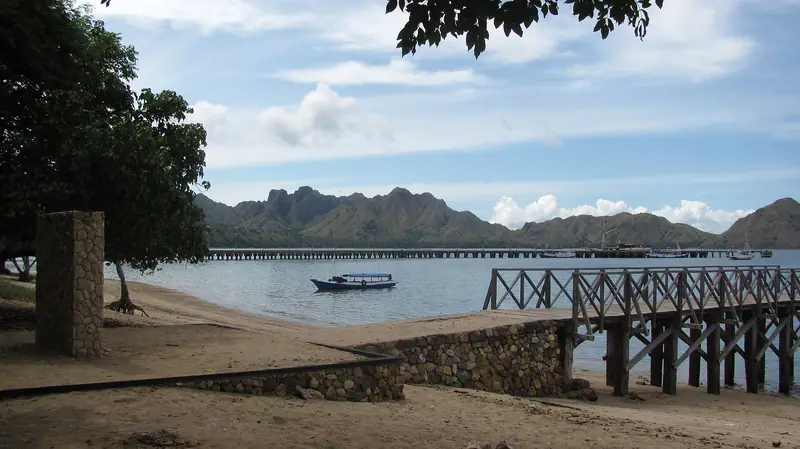
Shore transfers vary with the vessel and the state of the tide. A day at sea can include a pier, a small transfer boat or a step into the water. Your Komodo day trip starts with boarding in town, then repeats the transfer in some form at every landing. If someone has limited mobility, the useful measurement is the largest step anywhere on the route, including the one back from shore.
A separate water briefing should tell swimmers where to stay, how to signal to the crew and how they will get back on board. Let the guide know if you want to stay dry instead. Going in at a beach and coming back up the boat ladder are different demands. For a mixed group, agree at each stop which guests are staying on the vessel and how the crew is keeping track of them. If current or visibility makes the planned site unsuitable, leave the entry decision with the crew.
Before you pay
Read the terms for a vessel held in port and for a sailing that goes ahead with an island or reef dropped. A cancellation and a shortened route can result in different refunds. For a revised sailing, the seller’s terms determine what happens to the charge for an island landing or reef stop that the new route skips. The park reservation and any ranger charge collected separately can follow their own procedures. If there are separate receipts for the boat and park entry, keep both. A boat-price credit can leave the park payment to be resolved by a separate office.
A substitute boat can change access, seating, jacket sizes, cabins or even where the group meets. On an overnight cruise, a different cabin can change who shares sleeping space and how you reach the deck at night. If a revised route still sails and the priority stop is gone, use the replacement stop list to decide whether it is still the trip you want.
A hold can lead to a later departure, a change of date or cancellation. If the boat is waiting at the pier, preserve enough time to board if clearance arrives later. If the seller moves the trip to another date, your existing hotel and flight commitments still apply. Keep the amended payment record with your original booking so both dates are recorded.
Allow time to return
A dusk stop such as Kalong Island ties an itinerary to fading light. An overnight boat can watch the bats and remain out for the night, while a day boat still has to sail back to town under the harbour authority’s instructions. Treat the boat’s arrival at the pier and the hotel drop-off as separate times when you plan dinner or onward travel.
Build the boat trip around the time you can give it. A return delayed by weather, a landing change or a long transfer at the pier can use the gap in a same-day flight connection. Where the boat is the main reason for the trip, leave a day in Labuan Bajo when your schedule allows.