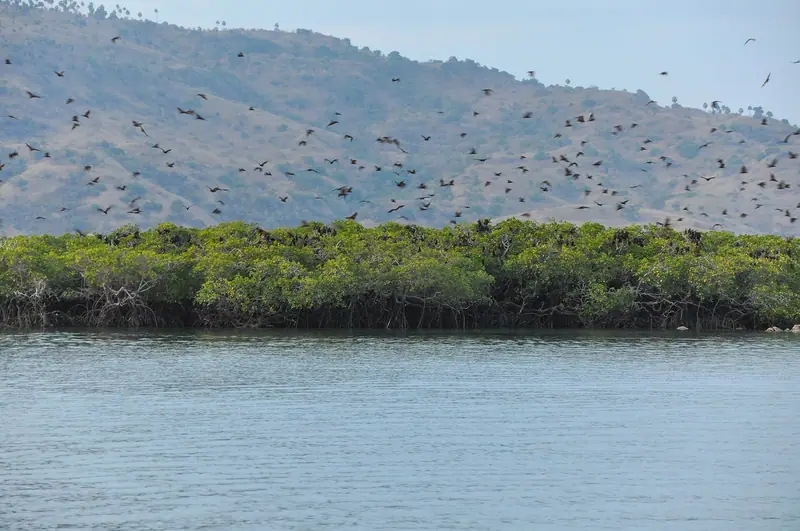
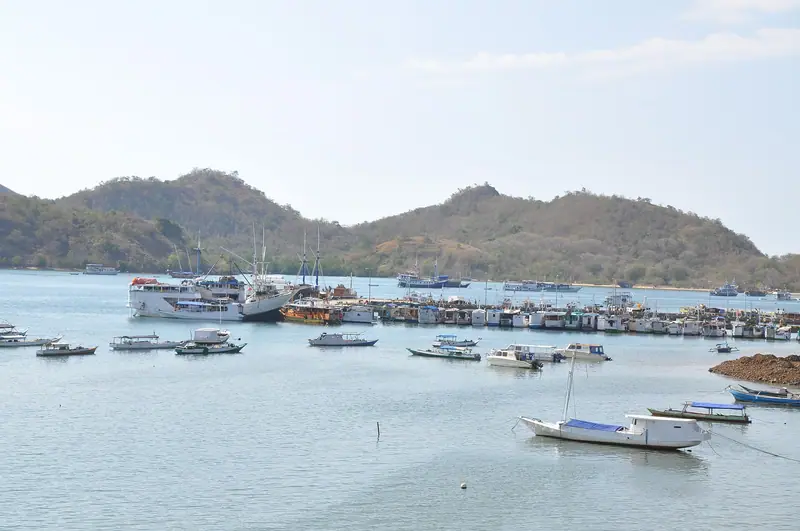
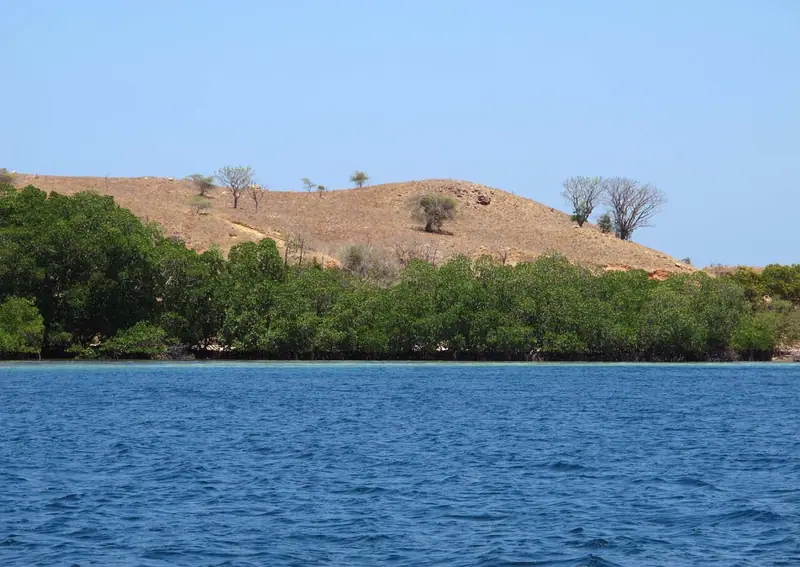
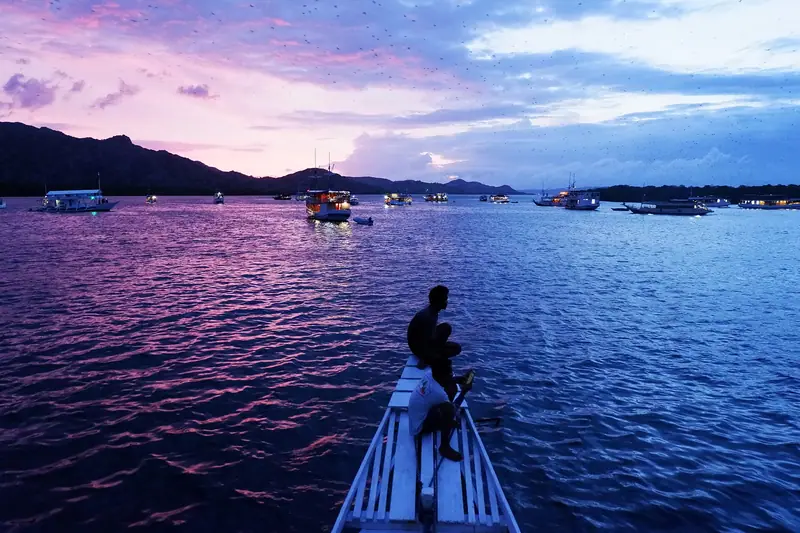
Kalong is viewed from the boat. The private speedboat stops at Rinca first, then lists Manjarite for snorkelling and Kelor. Staying aboard at the water stop depends on the crew’s supervision and boarding arrangements. A traveller on the shared reef trip reported staying aboard was an option at Taka Makassar.
We may earn a commission if you book through these links, at no extra cost to you.
The seven-hour trip covers up to four guests and includes transfers, a guide, lunch and snorkelling gear. The seller lists Rinca entry separately at IDR 500,000 per person.
The published climb starts ashore. Time at the viewpoint depends on the schedule and walking pace
Dragon walk2
Follow the ranger ashore
The ranger leads the group on the trail available for that park session
Pink Beach3
Walk or sit on the sand if the boat can land
A dry landing depends on the boat and water level. When the transfer allows it, this is a shore stop
Manta Point4
Open-water snorkel on the sample route
This is an offshore stop. Staying aboard is the dry option if the boat keeps passengers on deck
Kalong5
Watch from the deck at dusk
The viewing takes place aboard. The bats leave the mangroves at dusk
Sample three-day sailing6
Listing excludes non-swimmers
The listing excludes non-swimmers, even if they plan to skip the water stops
Activity type follows the named sources. Exact transfer and conditions depend on your boat and day.Checked · Sources: 123456
Come for the land stops if you travel with swimmers. On Padar, the effort is the hill and the descent. On the dragon islands, it is the walk from the landing to the ranger meeting point and whatever trail the ranger permits. It helps to have a trip that makes room for both kinds of visit and still leaves the rest of your group time in the water. A whole day of repeated open-water stops is less useful if you spend most of the itinerary on deck.
Separate a dry activity from dry access. A beach visit can be spent entirely on sand, but the crew may use a tender from the anchored boat. A tender can drop passengers at a jetty or at the waterline. The waterline approach may leave an open step or a stretch of shallows to cross. At a quay the height difference can change with the tide. Railings and the placement of the steps depend on the boat and the side it uses to come alongside. The list of stops alone cannot answer those questions.
Plan a mixed group
For each water stop, agree beforehand who stays aboard. Someone who stays dry needs a safe place to wait out of direct sun and a way to reach the crew. At an offshore water stop the vessel may anchor, drift or follow the group to the pickup. That affects where you sit and how much the deck moves. On a long boat day you also need water on deck and access to a toilet. If meals are served ashore, the same beach transfer applies to lunch. Eating on board can be simpler for a passenger who cannot make that transfer.
The simplest split is a trip with more than one land attraction. Try Padar and the Loh Buaya dragon landing before the water activities if your selected boat lists both. A beach can be suitable dry time when the crew can put you on shore, whereas a sandbar can disappear under the tide. The day boat comparison distinguishes ranger landings, beaches approached by tender and stops made only for swimmers. These are different ways to spend the same boat trip.
An evening at Kalong changes the trade-off on an overnight boat. The sight takes place in the air and the operator’s itinerary describes watching from the deck. Deck seats, cabin steps and railings matter between landings as well as at a water stop. A low seat on deck may be easier to reach than the shaded seating upstairs. A boat set up for a relaxed day aboard makes those features available during the whole group’s swim and after the vessel moves to the pickup.
Screen the listing
The public three-day sailing example expressly excludes non-swimmers. Keep that restriction even if the inclusions list mentions life jackets. Read both the suitability section and the planned route before comparing fares. If the listing requires all passengers to enter the water, choose a sailing that allows deck-only participation. The existing passenger restriction otherwise applies even when you leave your swim gear at home. An advertisement that mentions optional snorkelling still needs to explain where you can wait and how you board at the next stop.
The shared early speedboat example also specifies moderate fitness and is not wheelchair accessible. Those restrictions apply to that offer. For someone who cannot use a low-sided tender, a named pier landing with a manageable deck step may suit the group better than a route built around beach transfers. The family and boarding guide has questions to use at the hotel pickup, gangway, deck and shore.
Manta Point from aboard
A manta stop can leave the dry group waiting while swimmers look in the water. Treat a possible view from aboard as a bonus. Underwater photographs on the trip page do not describe the view from the rail, and the crew can drop the site when conditions change. Pick a land or deck activity that you would make the trip for on its own.
Gear can be included on a trip without every piece fitting you. The direct day route includes snorkel equipment, and its public FAQ describes towels. A vessel needs life jackets in usable sizes for the crossing, independently of whether you plan to enter the water. The boat safety guide covers deck access, tenders and the equipment the crew uses before getting under way in Labuan Bajo.
Plan a dry route
Get the name of the dragon landing in writing and mark the timing of the shore visits. If a tender cannot land, the crew may skip the stop or replace it with a landing the crew can approach safely. A missed swim may mean more time at a land sight or a direct return. If you have chartered a boat, give the route priority you want, such as a dragon walk first and a beach only if the tide suits. If you share a boat, check whether the alternate itinerary leaves a passenger who stays aboard with more than one land stop. Keep the booked route and boarding arrangements together offline so the crew at the pier can see what the seller arranged.
Good to know
Questions about Komodo National Park
Do you need to swim to visit Komodo?
You can walk with a ranger and visit Padar without snorkelling. A pier landing may be dry, while a transfer to a beach can involve stepping out of a tender and wading the last few metres.
Can I stay on the boat while others snorkel?
Some boats allow passengers to stay aboard. A listing that excludes non-swimmers applies that rule to the whole trip, including guests who only plan to wait on deck. The useful answer names the stops where you may remain aboard and which crew member stays with you.
Is a life jacket enough to snorkel at Manta Point?
A life jacket does not establish that a water site suits a non-swimmer. Check the operator's restrictions and keep the stop dry if you cannot make the planned entry and exit.
Can I watch flying foxes without going ashore?
Yes on routes that call at Kalong at dusk and watch from the vessel. A boat that names Kalong as a dusk stop is planning to watch from offshore. Swimming is a separate activity at a different site.